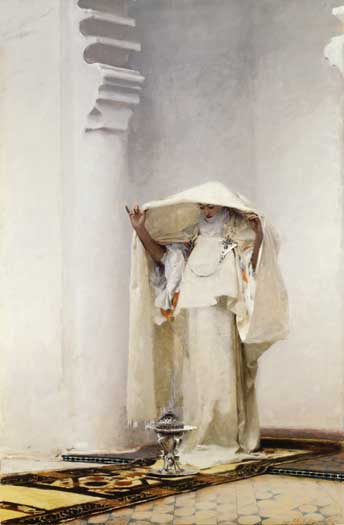
- Barack Obama, to Cairo University, June 2009
This is obviously not art related...but I thought this would be important to share, given the recent current events. As world citizens, we need to learn to work together, respect each other, to find peace. Maybe it will never happen, but we need to try. Let us remember that that man is NOT the face of Islam and that all of us, Christians, Jews, Muslims, Hindus, Buddhists, Taoists, Agnostics, Atheists and all others of faith, share this earth and should work every day to contribute to the joys of life, not the tragedies.
Let's remember those who were lost on 9/11 and let them finally rest. Let's be thankful this evil man met justice, and have pride in all of those who had fought and died to make that happen. Let's be united for once, because people of all nationalities, all political parties, all races, all ages and genders contributed to this day.
But let's not be like him. Let's not relish another's death. Even if its deserved.I'm not saying "Don't be happy" or relieved, or satisfied, or glad that he's gone and no longer a threat. All I'm hoping is that we don't let ourselves become blood-thirsty like he was.
"Hatred paralyzes life; love releases it. Hatred confuses life; love harmonizes it. Hatred darkens life; love illuminates it."
- Martin Luther King Jr.

 Wafrica is a line by designer Serge Mouangue that was born in Cameroon 1973, but moved to Paris at age 6. He was trained in Parisian schools for interior and industrial design. During his studies, he cultivated an intense interest in cultures that took him all over the world...Australia, USA, China, Mexico, and Turkey. After school, he moved to Australia for a brief time where he worked as a free-lance artist and industrial designer. He returned to France when offered a position designing cars for a French car company. At this time, he was able to take some Japanese language courses and became fascinated with the culture...fortunately, Nissan car company offered him a position in Japan in 2006 so he got to pursue this interest first-hand. Mounague is currently based out of Tokyo.
  Wafrica developed from Tokyo's inspiration - Japanese culture is simultaneously so modern, yet respectful and prideful of the traditions of the past. Mouangue seized this idea for his line, combining the traditional Japanese kimono, a once-common and now withering fashion trend, with the modern, cotton African print textiles. Launched in March of 2008, Wafrica livens the traditional kimono with bold, vivid African patterns and colors, as well as printed wax cotton, fabric a far cry of kimono's typical luxurious silks.


 D) The music is more broadway/theatrical than typical Disney movies. I didn't even know it was a musical! And while it is, I don't think that distracts from the story or would make it less enjoyable for say, I dunno, a guy.


 In the Garden, 1892-1894. Unlike Twachtman, Dewing frequently incorporated wistful, graceful female figures in his works. There is usually more than one, showing the woman interacting outdoors in a dreamworld landscape. They aren't really in a specific space, rather just a green outdoor haze. You even get a peak of the white moon behind the tree on the right.

 This is Dans les Oliviers, á Capri (1878) featuring then seventeen-year-old Rosina Ferrara, an Ana-Capri girl. It's 31.5 x 25 inches, oil on canvas, and there are three versions. Two are in private collections and one is at the Museum of Fine Arts in Boston. This picture doesn't really do it justice...the golds, her pink skirt, the deep greenblue-gray of the trees are much more vivid. I wish I could see it in person!
 In my sources, it's not identified whether or not this is actually Rosina, but I would argue that it is based on the pink skirts, the up-do, and the fact that in the following picture, she has onions strung over her shoulder. This work, called Stringing Onions (1878), is a warm, quiet working scene...the women are confined in their space, but the golden white walls and large window make the atmosphere warm instead of oppressive.

 Monkey!
  The Nazca lines are found in the Nazca Desert in southern Peru. Scholars believe that the lines belong to the long-since dissolved Nazca race (200 BC to 650 AD), who possibly created these giant symbols between 400 and 650 AD (CE). This particular desert, also known as the Pampa Colorada (Red Plain), is 15 miles wide and 37 miles long and a part of a much larger desert running 1,400 miles and parallel to the Pacific Ocean.